
How to Adapt Your Outdoor Winter Running so You Stay Fast AND Don’t Get Hurt
By Luc Mahler
The real challenge of winter running
Winter doesn’t just change temperature — it changes biomechanics.
Cold, uneven, unpredictable ground forces your body to:
shorten your stride
tighten your hip flexors
reduce natural ankle mobility
increase stabilization demands through the foot & lateral hip
If you run the same way you did in September, your body pays the price in December — usually with calf tightness, hamstring strains, or those familiar lateral knee aches.
The goal isn’t to fight winter.
It’s to run with it.
1) Choose traction based on the terrain
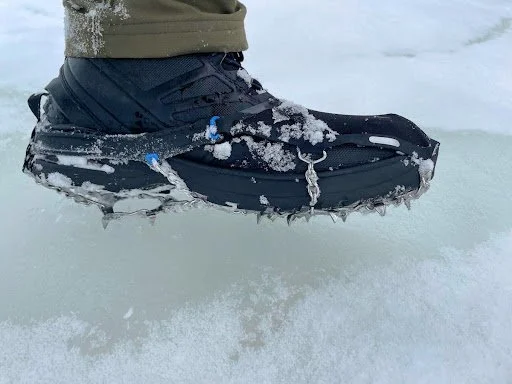
Think of traction as your seasonal equipment, not personality:
Clear pavement:
Normal road shoes — maybe winter rubber compound.
Mixed snow/compact ice:
Slip-on microspikes or Yaktrax.
Full ice / packed snow:
Embedded stud shoes (IceBug, Norda, Salomon winter models).
This reduces foot-slip forces that often travel straight to the knee.
2) Adjust your cadence & stride length
Winter is short-stride season.
Increase cadence slightly
Keep foot strike under center of mass
Lower vertical bounce
Accept that speed is not linear with effort this time of year
You’re not being “slow” — you’re being economically stable.
The athletes who struggle in winter are the ones who try to maintain summer stride length at winter traction levels.
3) Warm up before stepping outside
Do not use the first kilometre as a warm-up.
Try this indoors, 3–4 minutes total:
hip airplanes
ankle mobility drills
light calf pulses
marching A-steps
30 seconds of butt-kicks
In summer, warm weather does half the job.
In winter, you have to create your mobility before you move.
4) Learn the difference between “winter soreness” and “injury risk”
Normal:
mild calf tightness
slightly heavier legs
slower pace at same HR
Warning signs:
medial ankle pain
lateral knee pain
one-sided calf or achilles pulling
sharp glute or hamstring pain on push-off
These are not “just winter things.”
They are compensation alarms.
5) Treat winter as a strength block disguised as running

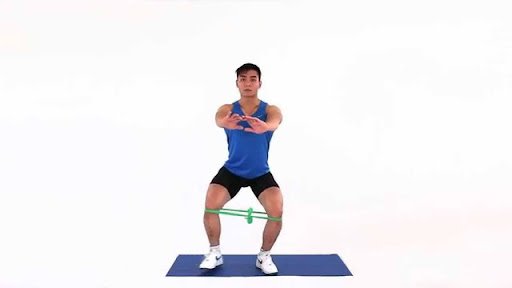
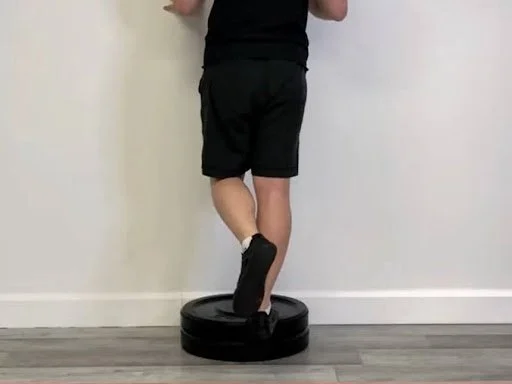
2–3x/week, even 15 minutes makes a difference
Single-leg step-ups
Hip hikes
Banded lateral walks
Slow calf eccentrics
Hamstring sliders
Winter is where durability is built.
Summer is where speed lives.
If you do the work now, you steal speed from future you — in a good way.
6) Don’t skip foot + ankle conditioning
Snow and ice demand micro-stabilization.
If you haven’t prepared your feet, they’ll recruit the knee and hip to compensate.
2 minutes a day:
barefoot toe-spread work
towel scrunches
controlled ankle circles
tiptoe holds
A strong foot is the best insurance policy for winter running.
7) Respect the conditions
Running outside is not a badge of toughness. It’s a training choice.
On glassy ice with wind-shear?
Run indoors — treadmill or indoor track.
On -20°C days?
Layer up or swap for bike trainer, ski, or strength.
This is not weakness — it’s strategy.
The toughest athletes are the ones who make smart adjustments, not heroic mistakes.
Final thoughts — and how we help
Winter running has its own rhythm.
If you adapt your stride, gear, prep, and expectations… you’ll come out of winter more durable, more resilient, and ready to fly when the roads thaw.
At The Movement Co, this is our specialty — helping endurance athletes navigate the winter season so they don’t just “stay healthy”… they actually improve.
If you want help tailoring your winter approach — footwear selection, running mechanics, strength programming, gait analysis — reach out and we’ll make a plan that matches your goals.